How to create hands-on activities for Year 2 pupils to help them learn about their local built heritage without a site visit or any museum objects? This was the challenge the local Parish Council history group took on at the end of the summer term.
The context: May 2022 saw the launch of the ‘Beyond the Bricks’ exhibition in Hatfield Peverel library which explored the stories of local historic buildings and features (you can read more about the project here). The Year 2 teacher at Hatfield Peverel Infant school was keen to borrow the exhibition for her pupils to explore, and we set about creating associated activities for the children to deepen their engagement.
Starting Point and Aims: Luckily, we had a few starting objects: copies of the history of Hatfield Peverel by J. P. Fitch, a selection of everyday items dug up in the back garden of one of the cottages featured in the exhibition and a handful of old food tins and coins. This showcases well the benefits of the local community working directly on their local history and getting engaged with the project. We also knew what we wanted the pupils to gain from the activities – an awareness of how the built heritage and lives of local residents had changed over the last 150 years, and the chance to practice their historical investigative skills.
The Activities:
Sadly, in the end I was not able to help with the school visit on the day as the children and my husband all had Covid, but I enjoyed organising the activities, and the rest of the History Group took the lead on the day at the school (Margaret Freeman, Helen Peter and Lin Shaw). First the children enjoyed a slideshow presentation of ‘then’ and ‘now’ photos of key buildings and scenes around the village, plus historic Ordnance Survey maps of the village, all put together by Helen Peter. The children did an excellent job of discussing the differences. We then left 5 activity packs with accompanying teacher notes for the class to enjoy together. These were:
Be an Archaeologist – Helen Peter put together trays of objects buried in sand for the children to dig up and investigate
Brick and Building Styles – We gave the children basic information about the main building materials and brick-laying styles found around the local area, then the children had a go at laying out ‘card bricks’ in English Bond and Flemish Bond patterns.
Investigating Building Materials – We managed to gather a range of building materials for the children to handle, explore, and guess what they were and what they were used for. This included brick, flint, and some replica ‘breton brut’ concrete inspired by the design of our village library.
School Then and Now – Using the books on the history of the school the children explored questions such as: what similarities and differences they could see in the photos between the uniforms and activities in the past and their clothing and activities today?
Phones – One of the features included in the exhibition is the village’s last remaining phone box. To help the pupils think about its’ importance in local social history we were able to gather a selection of old landline and mobile phones for them to explore the evolution of phones and communication.
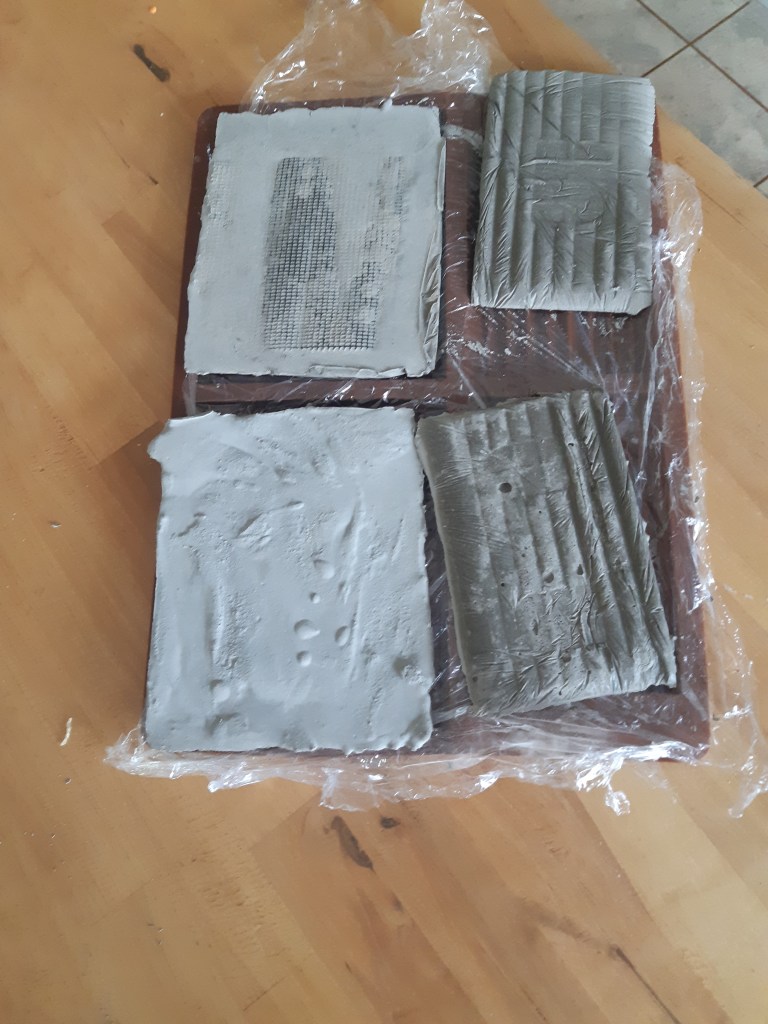
Inspired by the textured walls of our local library which were made by pressing patterned wooden slats into the concrete.
Feedback from the school was very positive, and all the materials have been kept so that we can run the activities again. Thank you to Ms McGaughey and the Infant School for inviting us and for the other members of the History group for taking over the lead when I couldn’t go to the school. You can read the write up in the local village ‘Review’ magazine here. If you would like further details of the activities please do get in touch.
 Jennifer Rowland