Uncategorized

Exploring Place with Frank Rennie’s new book

“The names that we give to the places in the landscape, no matter whether it relates to their physical shape, their colour, their functional use, or their historical and spiritual legacy, are the foundations of our awareness of who we are and how we come to be precisely here, in this named place.”

Last night I read Frank Rennie’s new book Among the Layers of the Land which he will be discussing at the upcoming St Andrew’s Book Festival in London (25 Nov – 1 Dec www.standrewsbookfestival.org). Combining scholarly analysis of our connection to place and the different knowledge bases we use to understand it with short fictional stories this work encourages us to think more deeply about how we connect with the world around us. A story about how the local gillie tricked a millionaire visitor to crawl around collecting rabbit poo is a memorable final story!

This book was particularly interesting for me as my Masters’ dissertation (over 10 years ago now – wow) looked at place-making and community engagement in the local museum sector. My dissertation focused on built heritage, objects, place-names and intangible heritage and Frank’s book also draws out how important naming of places and human uses and changes to the land are in our understanding of the landscape. Our view of landscape can also change over time. Maps are used as an example on point – maps, like all historical documents, contain their own bias; the features that the cartographer chooses to include can be dictated by personal, political or academic motives.

The book keys into many themes – geology, geography, etymology, cultural heritage, environmental studies – and I’m sure Frank’s joint event with James Crawford, author of Wild History – Journeys into Lost Scotland will be very interesting and evocative, whether you are very familiar with or relatively new like me to Scotland’s rich landscapes. I enjoyed learning about the rich nuances of the Gaelic language in describing the landscape: colour descriptions in Gaelic are much more nuanced than Standard English – many of the place names are graphically descriptive of the shape of the landform, or the colouration produced by natural vegetation or by the underlying geology. Chromatic colour in Galiec is heavily dependent on the landscape setting rather than simply the frequency of absorbed light. There are also special Gaelic words highlighting our connection to place: cianalas – loosely meaning homesickness but which can be much more intense, and buntanas – the concept of belonging, of rootedness.
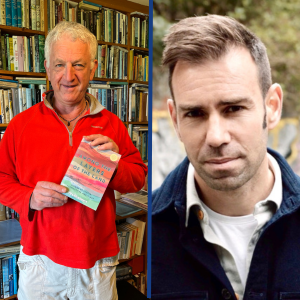
Frank Rennie and James Crawford

Frank lives with his family in the crofting village of South Galson in the Isle of Lewis, a community-owned estate. He is Professor of Sustainable Rural Development at the University of the Highlands and Islands and a Research Associate of the UHI Environmental Research Institute. A natural scientist by training and inclination, he has also been closely involved in the community and cultural development of this region for forty years.

I’m also in the process of reading Kat Hill’s Bothy – In Search of Shelter which also explores our connection to place, environmental management and the written archives of bothy visitors. Kat’s event follows on from Frank and James’ on Thursday 28 November, guaranteeing a very interesting evening.  

Event Details for Frank Rennie and James Crawford  

Thursday 28 November

7:15pm

St Columba’s Church, LONDON SW1X 0BD

 More event details and tickets at: https://tinyurl.com/5xvskxk9
Uncategorized

Star-struck at the St Andrew’s Book Festival Line-Up

Whatever types of books are your bag there will be events to match. There are memoirs
and biographies from Simple Minds guitarist Derek Forbes, Scottish writer and broadcaster Damian Barr who hosts The Big Scottish Book Club, plus Chitra Ramaswamy on the story of her decade-long friendship with Holocaust survivor Henry Wuga.  There will be politics from Gavin Esler and James Naughtie, best known for presenting BBC Newsnight and Radio 4’s Today programme respectively, and Jen Stout discussing her
coverage of the human cost of the conflict in Ukraine. Two historians are also
joining the line-up – Alistair Moffat, one of Scotland’s most respected popular
historians and journalist Alan Taylor who is currently writing an ‘autobiography’
of Edinburgh. There is also geography and the environment with Kat Hill’s tour
of the UK in search of bothies.

Picture Credit: Scotland House

Uncategorized

Scots in London St Andrew’s Book Festival

I’m excited to be working on my first book festival as part of my role at Scots in London. This St Andrew’s tide Scots in London will be hosting their first book festival in London – the St Andrew’s Book Festival – http://www.standrewsbookfestival.org

We are working with HandHeld events who are curating the programme for us – Jo and Lyndy are the experts behind many of the country’s leading book festivals, including Hay, Cheltenham and Chiswick to name just a few!

We already have some big names confirmed, including best-selling authors Sir Alexander McCall Smith, Sir Ian Rankin, Judy Murray and Andrew O’Hagan. Alongside these bestsellers the Festival will also showcase debut novelists and host events for schools and families.

I’m currently working on the Festival marketing and supporting the event planning, and working with a designer to build the Festival website.

With a long list of authors already booked I have a varied and exciting list of books to be reading over the coming months!

Uncategorized

An evening of Scottish Music, Dance, Poetry…and meeting HRH Princess Anne

Last month it was my pleasure to be part of the event team working on the inaugural Scots in London Gala evening. Featuring Scottish music, poetry, song and dance, the gala brought London’s Scottish diaspora together on Wednesday 11 October, with the official launch of Scots in London by HRH Princess Anne, The Princess Royal.

Meeting HRH The Princess Royal in The Regimental Chapel at St Columba’s Church.
Photo credit: Scots in London http://www.scotsinlondon.org

The Gala evening combined a showcase for Scottish culture with networking opportunities for Scottish societies, clubs, churches and charities, supported by the Scottish government and London’s Scottish business community. This was the first time I had worked on an event attended by a senior royal and it was a great learning experience to work with an expert team from St Columba’s Church, ScotsCare and The Caledonian Club.

The event took place at St Columba’s Church in Knightsbridge, a beautiful venue and part of the Church of Scotland. The concert programme was expertly curated by professional musician Mary Jannet-Leith www.mary-jannetleith.com.

Highlights from the concert programme for me included the Pipes and Drums of the London Scottish Regiment – you cannot beat pipes and drums for rousing music, the charity ScotsCare Choir singing ‘Wild Mountain Thyme’, a song I love anyway and which then remained stuck in my head all through the weekend, the Tartan Thistle Dancers performing their special piece choregraphed for the late Queen’s platinum Jubilee, and as an avid #DowntonAbbey fan, seeing David Robb expertly compere the evening. The concert itself was also the point in the evening where I could sit back somewhat and just enjoy the performances as the bulk of my set-up and box office work had been done! I love live music and performances.

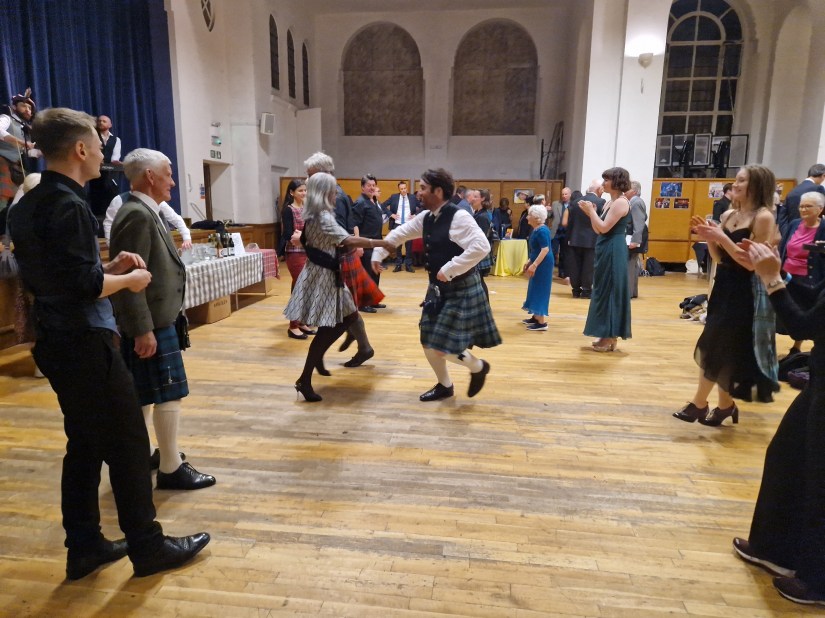
After the concert, guests enjoyed a reception with Scottish refreshments and music and the opportunity to meet staff from all the member organisations that make up Scots in London. The evening was filled with a feeling of warmth, conviviality and community, demonstrated by the breaking out of impromptu Scottish country dancing.

Impromptu Scottish Country Dancing. Photo credit: Jennifer Rowland for Scots in London.

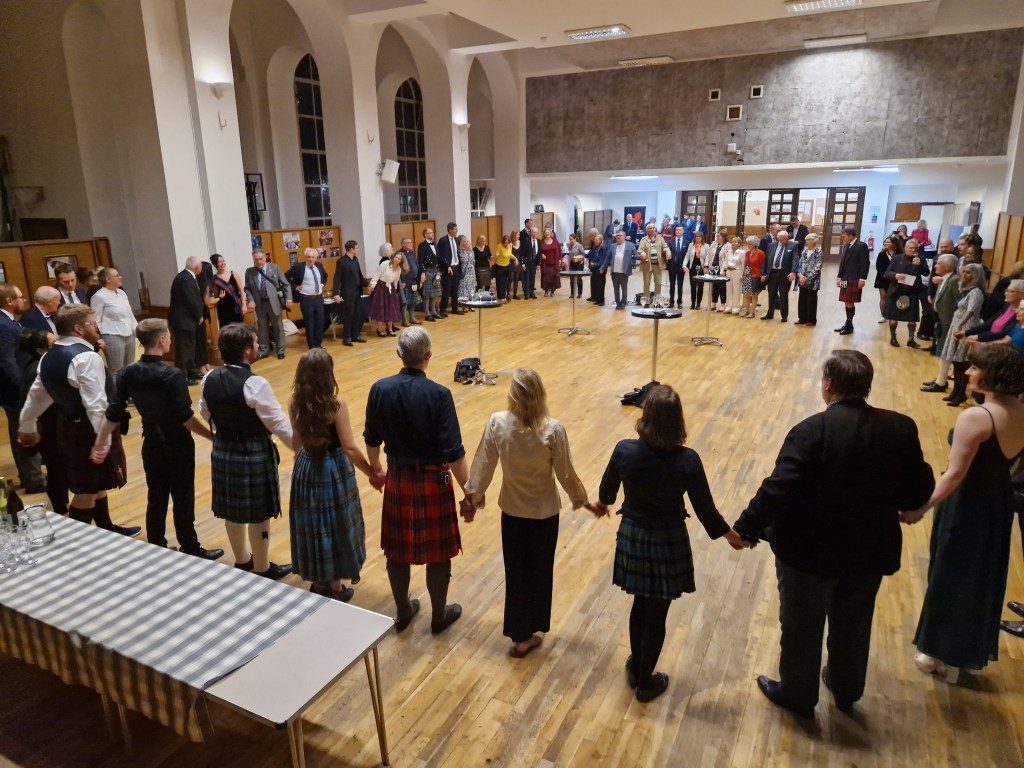
The evening finished with a rousing chorus of Auld Lang Syne. I’m looking forward to being part of the team of the team for the next Scots in London event – a Ceilidh evening on 9 March 2024.

Closing the evening with Auld Lang Syne (Photo Credit: Jennifer Rowland for Scots in London)

Uncategorized

The ‘tabloid’ press and the Essex Witchcraft Trials

As part of a new potential project for Hatfield Peverel Parish Council I have been undertaking research into the Essex Witchcraft Trials that took place in the 1500s and 1600s. Agnes Waterhouse of Hatfield Peverel is often said to be the first person executed for witchcraft in England. In fact, ‘witches’ had been killed for centuries, but Agnes was among the first victims to be hung after the passing of the new Witchcraft Act of 1563.

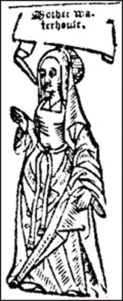
Given all the current discussion of the role and responsibilities of the press, especially in relation to the royal family, it seems very relevant that one of the many sad aspects of Agnes’ story is how she was covered in the press of her day. The image that was used to accompany the news pamphlet of 1566 [see right] looks almost like a nun rather than a local villager accused of witchcraft. The image is in fact just a standard woodcut that the publisher had of a ‘woman’, and the publisher obviously thought this ‘good enough’. For centuries it would have been thought this is what Agnes looked like, and today it is the only record we have.

The pamphlet also describes her trial and what she confessed to, mostly to try and save her daughter who was also on trial. The sensationalist accusations and confessions of Agnes’ and many other witch trials, covered with relish in the pamphlets, fed and stirred up the witch persecutions.

Image of ‘Agnes Waterhouse’ that appeared in the news pamphlet (the tabloid press of the day)

Agnes Waterhouse’s Story

Agnes was putt on trial along with her sister Elizabeth France and daughter Joan. She was accused of murdering her neighbour William Fynee, as well as possessing a demonic cat and other crimes. She and her daughter were also accused of sending a demonic dog with the face of a monkey to torment their neighbour, Agnes Browne. Agnes pleaded guilty and took the blame for all the alleged crimes to save her daughter. She was hung at the Chelmsford gallows on 29 July 1566. Her daughter was acquitted.

Information

Over the last few months there has been an excellent exhibition at Colchester Castle about witchcraft in Essex and the stories of some of the victims that were held at the castle while they awaited trial. For more information on ‘Wicked Spirits’ you can visit Wicked Spirits

Two memorials to the Essex Witchcraft trials have already been established, two projects led by long-term researcher John Worland. The Colchester memorial remembers the victims who were held in Colchester castle, and a new memorial has been unveiled in Chelmsford, to remember those tried at the assize courts in Chelmsford and hung at the gallows.

For a detailed study on Essex Witchcraft Stuart MacFarlane’s anthropological and historical study of the witchcraft trials in Essex is still an invaluable resource.

There is also an excellent blog post on Agnes Waterhouse from the Essex Record Office – The Trial of Agnes Waterhouse

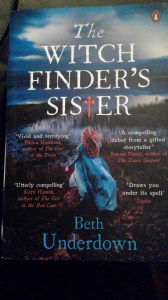
For getting into the atmosphere of the witchcraft persecutions, this novel by Beth Underdown is a very compelling and dark read. Written from the perspective of Matthew Hopkins’ sister, the novel writers aims to bring to life the atmosphere of the witch hunts of the 1600s and the mind-set of this infamous Essex witchfinder.

Uncategorized

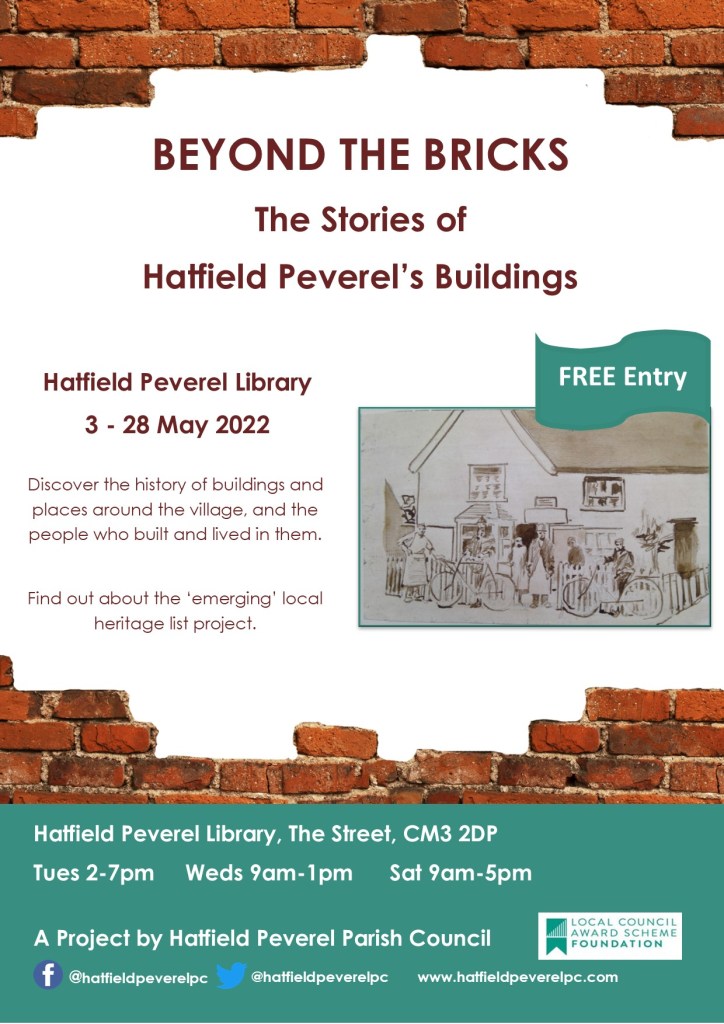
‘Beyond the Bricks’ Exhibition Launches

Dreaming spires, raw concrete remnants from the Cold War, picturesque old pubs. The parish of Hatfield Peverel in Essex is steeped in history which has left a rich legacy of historic buildings and places.

During the last year it has been my privilege to volunteer as part of the History Working Group for Hatfield Peverel Parish Council. The group was formed to help identify and research old buildings and features in the parish which do not currently have any statutory protection – they do not have a Grade I, Grade II or Grade II* listing. The aim is to include a number of these historic features on an ‘emerging’ local heritage list, with the possibility of some of them becoming ‘non-designated heritage assets’ in the future. The parish already has 52 listed features, an indicator of the richness of its built and landscape heritage, but there is strong community feeling that there are many more places and spaces that deserve protection for the future. More information about non-designated heritage assets can be found here: Locally Listed Heritage Assets – Historic England

Early on in the project I enjoyed helping out at engagement events and with the public consultation. It has been a great opportunity to refresh and revisit my design skills working on the public posters and displays. In 2022 I have taken the lead on putting together a public exhibition to showcase the research of the other group members for the benefit of all local residents. My thanks to all the volunteers who were very understanding about the need for me to keep all the material to strict word limits – it is tough to see so much hard work having to be boiled down to exhibition length, I have been through that experience many times! A special mention to Helen Peter for her hard work doing all the printing and mounting, and putting together the Methodist Chapel display.

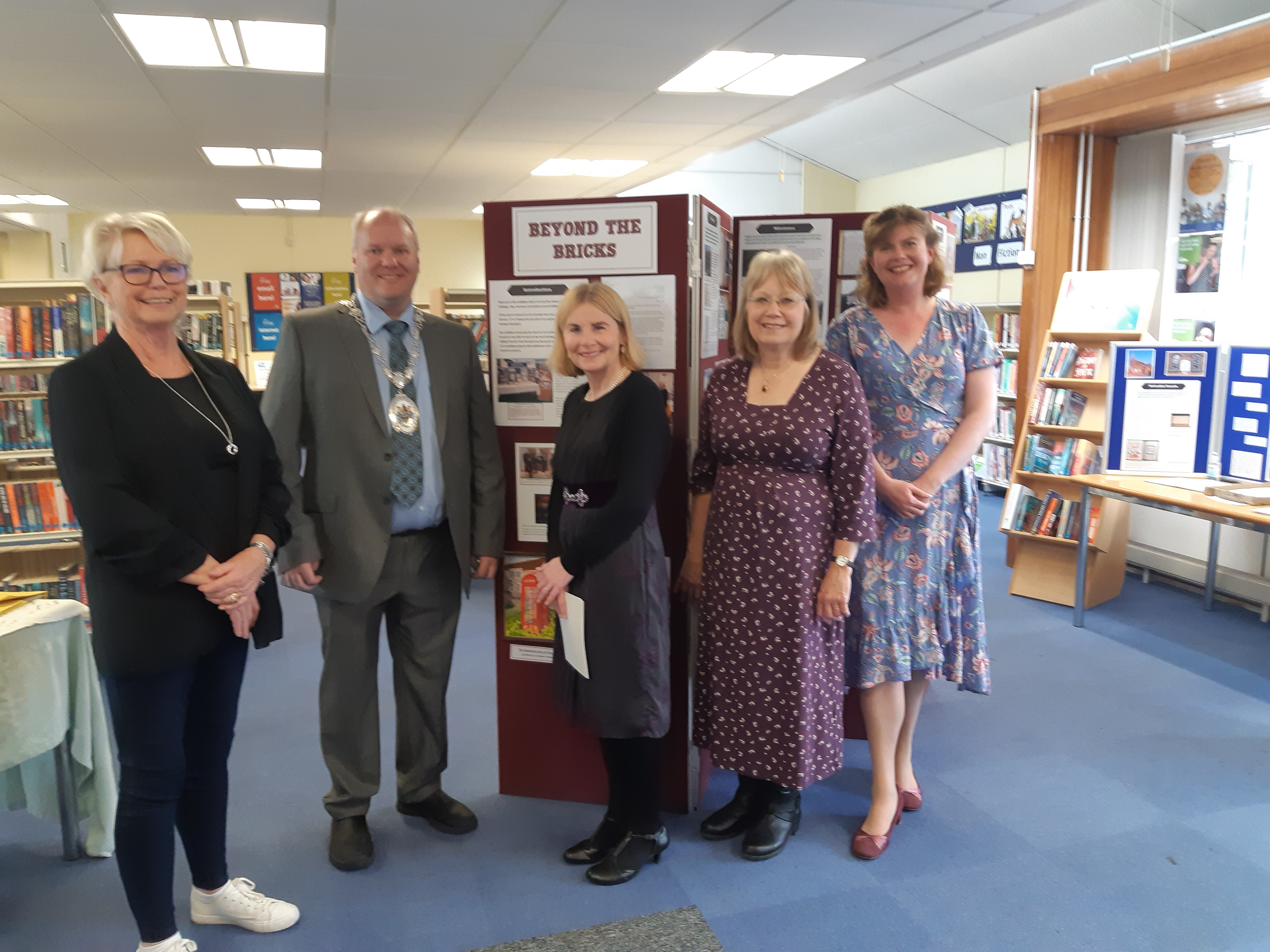
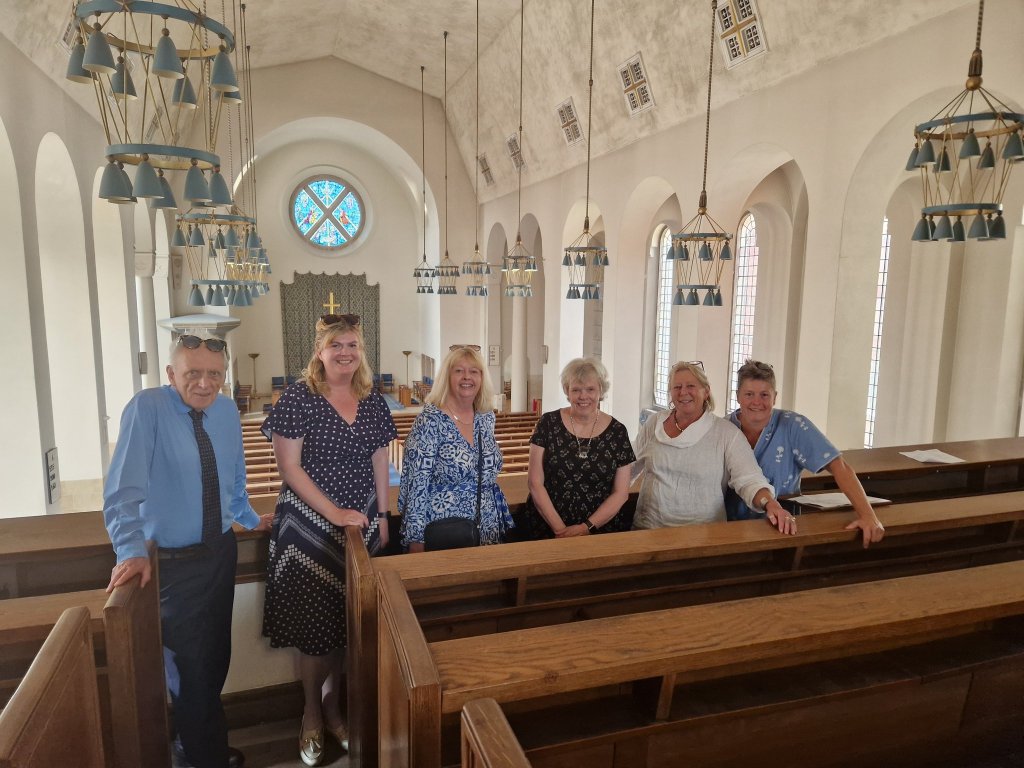
Official Opening of the exhibition with left to right: Cllr Lin Shaw; Cllr Hensman, Chair of Braintree District Council; Margaret Freeman Heritage Warden; Helen Peter; Jennifer Rowland

The exhibition is free and open in Hatfield Peverel library until 28 May. It will also be going on tour to the village primary school and to the ‘Party in the Park’ event on 4 June 2022.

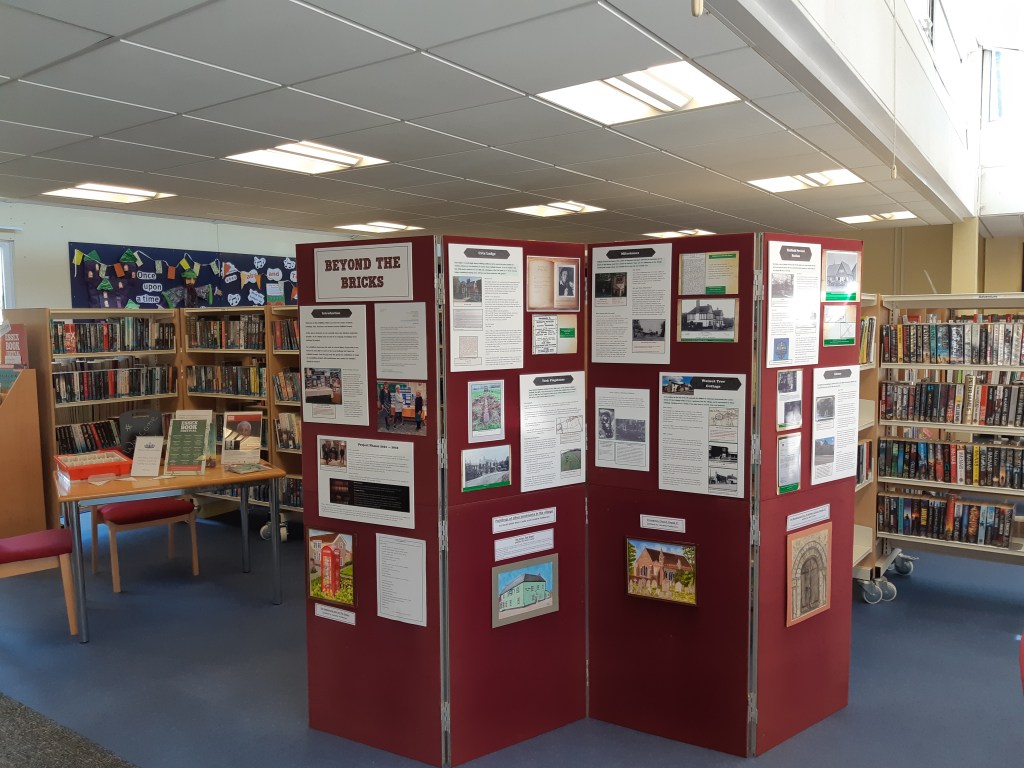
Part of the exhibition in Hatfield Peverel Library

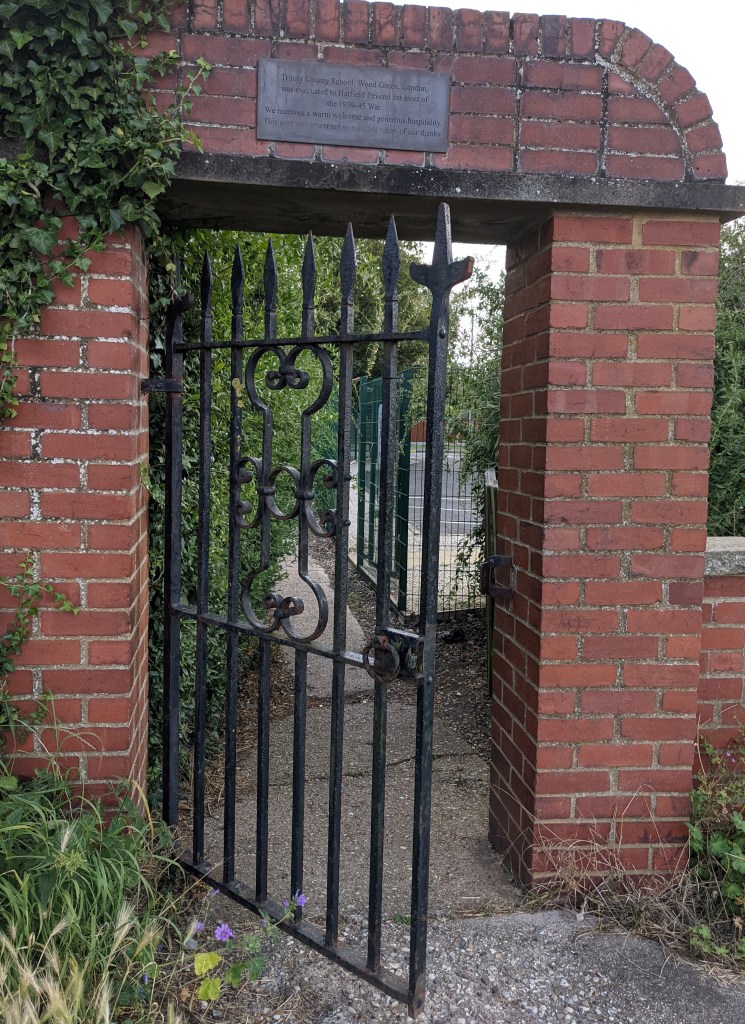
There are so many interesting features included in the exhibition. Among my personal highlights are the Trinity Memorial Gateway and the milestones. The Memorial Gateway was built on the village’s Recreation Ground in 1949 to thank the villagers for looking after the pupils and teachers of Trinity County Grammar School evacuated here from Wood Green during WWII. The two milestones mark the route of the original Roman road, later a turnpike route, from Colchester to London. Although small features easily overlooked, the milestones are a testament to the village’s position on a key transport route which brought so much trade over the years – and also accounts for the very high number of pubs in the village for a relatively small settlement!

The Trinity School Memorial Gateway. Photo by Margaret Freeman

I would like to thank the village’s Heritage Warden Margaret Freeman and the history group for including me in your project this year and putting your trust in me for all things display and graphic design related! It has been very rewarding to help with this project for the local community and I have made so many new local friends along the way.

Museum Volunteering, Uncategorized

Object Handling – The Power of touching the past at Chelmsford Museum

I always love running object handling activities with visitors of all ages. People enjoy visiting museums because of that powerful feeling associated with seeing real historical objects. Maybe the objects were part of their past, are associated with a famous event or person, or showcase the amazing skill of an artist or craftsmen. But if seeing the objects is amazing, then being able to touch them is the real jewel in the crown. It is one of the reasons museum staff and volunteers love working with collections so much, and it is so rewarding when visitors are able to share in this experience too.

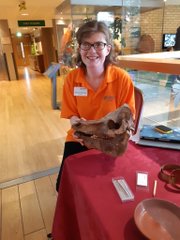
This autumn I started volunteering back at Chelmsford Museum, where I was working before I left to have my daughter. I help run the weekend object handling tables, and this week we had a number of archaeological objects. What is lovely about the objects is that they all connect to displays around the museum, so visitors are able to (literally) feel a connection to the objects they have seen behind glass. The items this week included Roman hair pins, coins and hypocaust tile (a tile from a Roman underfloor heating system), as well as a Bellarmine Jug (jugs from the 1500s and 1600s with the face of Cardinal Bellarmine from the Catholic church on), boars head, and a replica of the Bronze Age gold diadem found in Danbury in 2018. At 4000 years old, this is probably the oldest metalwork found in the county, and would have been worn by a wealthy and powerful person. The headband is now tightly wound, but on the handling table we had a replica that visitors could try on to see the original effect.

Museum Volunteering

Volunteering with Snapping the Stiletto

This autumn I was pleased to play a small part in the Essex-wide women’s history project ‘Snapping the Stiletto’. A two year project by Essex County Council to mark the centenary of the Representation of the People Act in 1918 which gave the first British women the vote, the project has explored how Essex women’s lives have changed since 1918. The project aimed to replace the outdated stereotype of ‘Essex Girls’ with stories of Strong Essex Women, and was a partnership project with museums across the county.

Signing up to the programme through their Volunteer Makers scheme, I have gained new skills and experience by getting my first Wikipedia article published. Writing for Wikipedia involves a different writing/editing style to a normal article or blog post, and learning how to use their platform. You can find the Wikipedia article here (credit to Tim Wander for all the research material behind this article!)

I also helped out at one of the project’s engagement tables in Chelmsford town centre, raising the profile of the project and helping more local people to discover the stories of Strong Essex Women.

To find out more about the project visit Snapping the Stiletto

Volunteering on the Snapping the Stiletto table at High Chelmer [Photo Credit: Snapping the Stiletto]